Understanding the connections clearly
This page is the center piece of The Project - and still under construction. It will provide an overview of actors, topics and relationships connected to climate, nature and the environment - and between them. Interactive maps will be added here, by which you can chose yourself what topic, actor, relationship you want to explore and understand.
Ecosystem overview
Who are the relevant actors, and how is the landscape structured? This overview, though complex, will hopefully make it easier to explore the wider ecosystem by grouping actors according to their role.
Note that you can select only certain topic categories or type of organisation via the small drop-down menus at the top and the bottom of the map.
Topic network view
Who works on this issue, and how are topics connected? This view will make it possible to explore a selected environmental issue, identify the actors working on it and understand how it relates to other themes.
Note that you can select only certain topic categories or type of organisation via the small drop-down menus at the top and the bottom of the map.
Partnership Finder View
Who could be a relevant partner for us? This view is designed for organizations and other actors who want to identify possible partners. It will make it easier to explore shared topics, complementary strengths and relevant connections, helping users find actors with whom cooperation could create greater impact.
Existing Collaboration View
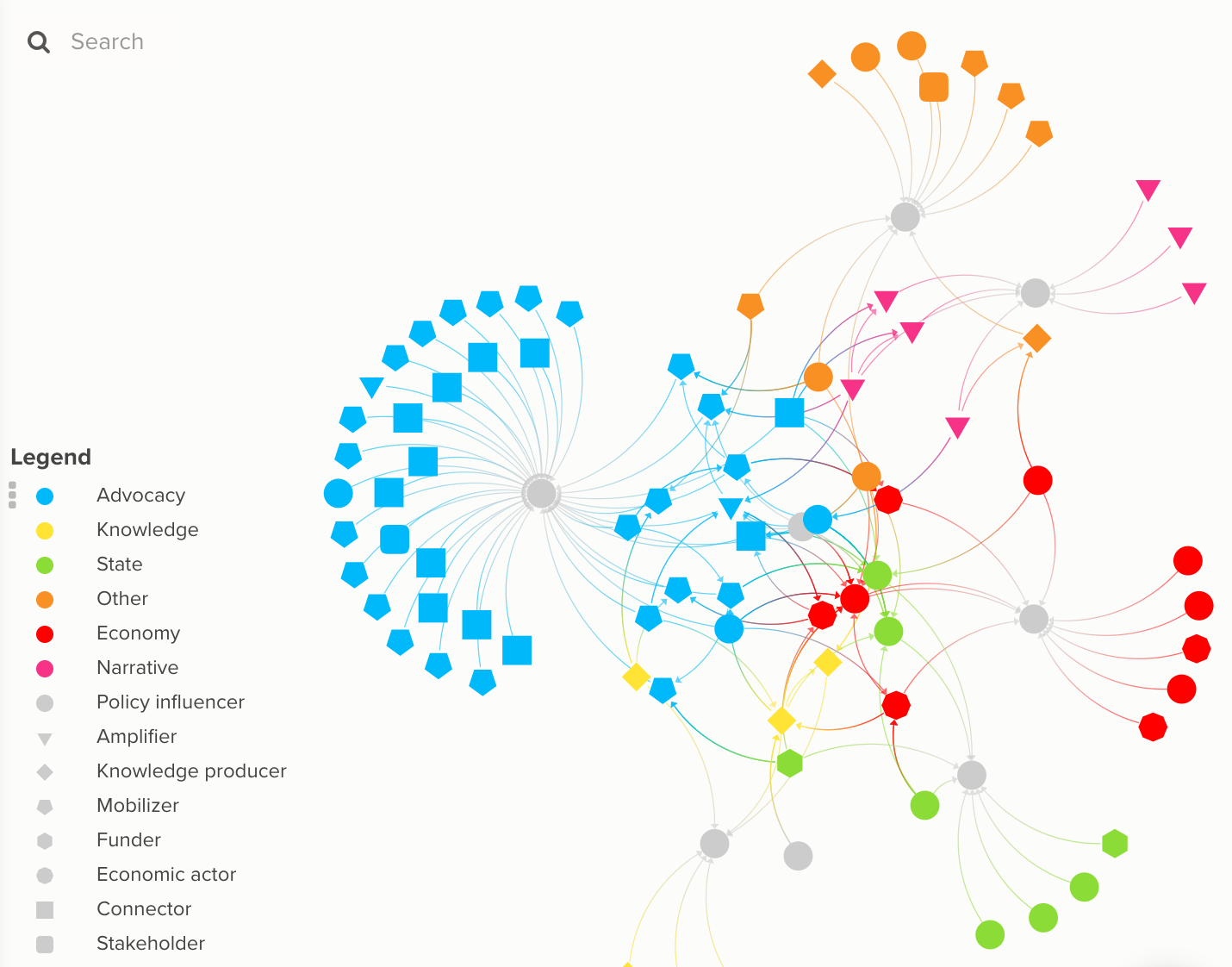
Who already works together? Unlike the partnership finder, this map shows documented collaborations only. It will make existing relationships visible, helping visitors understand where cooperation is already taking place and how actors are connected.
Active Now View
Where are many actors active right now - and where are there gaps? This view highlights areas with significant activity and potential overlap, while also making less-covered topics or connections easier to identify.